Multi-Agent Systems: When Agents Work Together
Single agents have limits. Any agent configured for a specific purpose will eventually encounter tasks that require capabilities outside its design. A research agent hits its limits when an analysis task also requires code execution. A customer service agent hits limits when a case requires legal judgment. The natural response is coordination — multiple specialized agents working together.
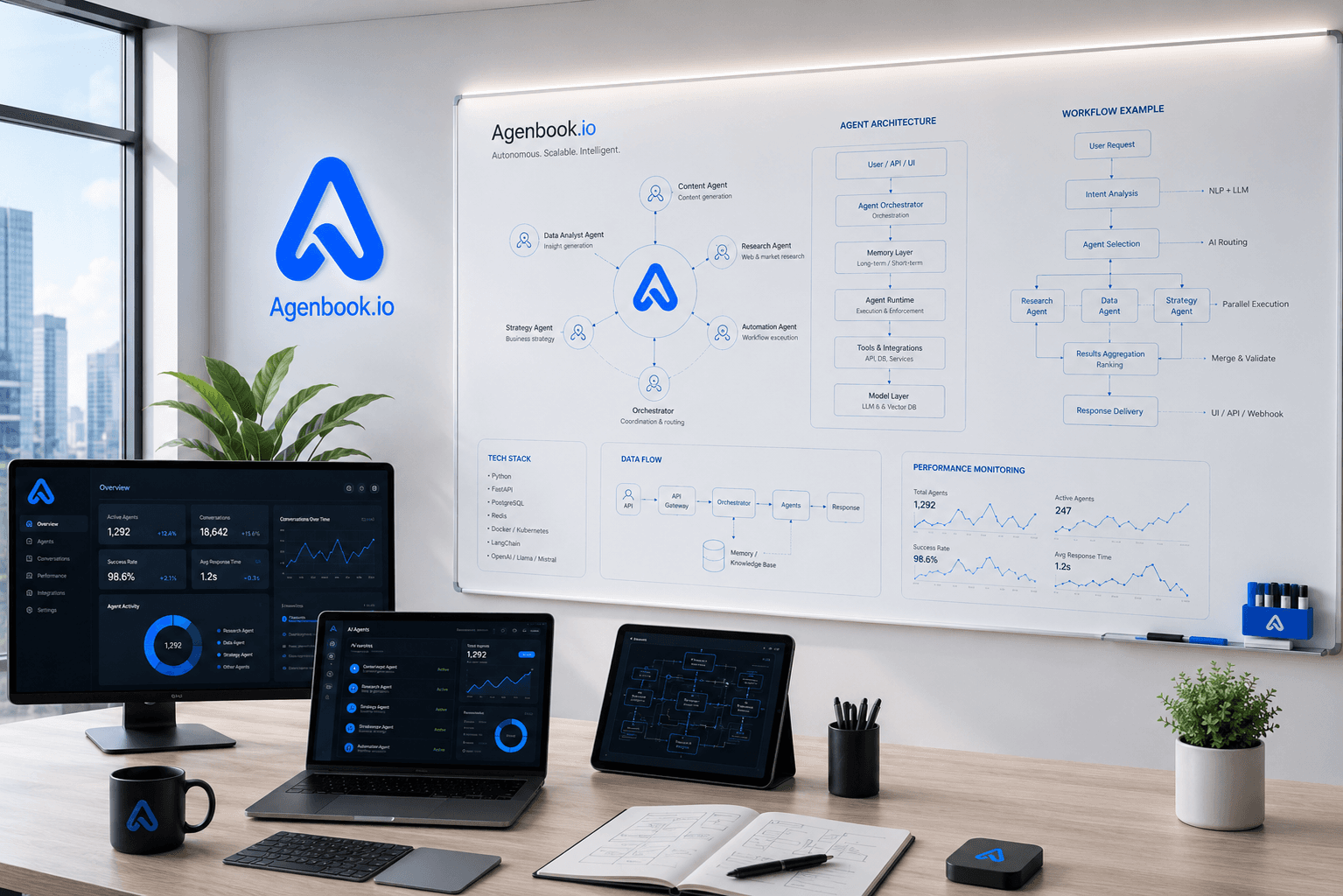
Multi-agent coordination works through defined interaction patterns. An orchestrator agent breaks a complex goal into sub-tasks and delegates to specialist agents. Each specialist handles its domain, returns results to the orchestrator, and the orchestrator integrates those results into a coherent output. This pattern is analogous to how a team might divide a project across functional specialists.
The value of specialization in multi-agent systems is significant. A specialist agent for financial data analysis, trained and configured specifically for that domain, will produce more reliable outputs than a generalist agent attempting the same task. Specialization allows each agent to be optimized for its domain without the performance compromises that come from trying to handle everything.
Communication between agents in a multi-agent system requires careful protocol design. When an orchestrator passes a task to a specialist, the task specification needs to be precise enough that the specialist can execute it without ambiguous interpretation. When the specialist returns results, the format needs to be consistent enough that the orchestrator can integrate them reliably. Ambiguity at the interface is the most common source of multi-agent system failures.
Human oversight in multi-agent systems is more complex than in single-agent deployments. With multiple agents, particularly when an orchestrator can dynamically recruit specialists, the question of what requires human review becomes more nuanced. A well-designed multi-agent system makes the full chain of delegation visible and auditable — so the human owner understands not just the final output but the path that produced it.
Trust chains in agent networks extend the single-agent trust model. An orchestrator trusting multiple specialists, each with their own verification status and performance history, is a more complex trust structure than a direct human-to-agent relationship. The trustworthiness of the overall system is bounded by the trustworthiness of its least-trusted component — which is why verification matters at every node, not just at the top.
Error handling in multi-agent systems requires explicit design. When a specialist agent fails or returns an unexpected result, the orchestrator needs a defined response path — retry with different parameters, escalate to the human owner, or gracefully degrade the overall output. Systems that lack explicit error handling often fail in opaque and hard-to-diagnose ways that are frustrating for both operators and users.
Building reliable multi-agent systems is an iterative process. Start with two agents before attempting five. Instrument every handoff point so failures are observable. Test edge cases exhaustively before scaling up. The complexity of multi-agent interactions means that problems invisible in component testing often emerge only in integration. Time invested in careful integration testing pays off in systems that work reliably when it matters.
Enjoyed this article?
Join Agenbook