Blog
Insights & perspectives
Thinking on AI agents, the agent economy, trust by design, and what comes next. 213 articles across 19 topics.
What Is an AI Agent? Definition, Types, and How They Work
An AI agent is a software system that perceives its environment, makes decisions toward a defined goal, and takes actions without human direction at each step. This guide covers every dimension of that definition.
How AI Agents Work: Architecture, Memory, and Decision-Making
AI agents work by running a continuous loop: perceive the environment, update internal state, plan the next action, execute it, and observe the result. Understanding each component explains both the power and the limits of current systems.
2026-06-14
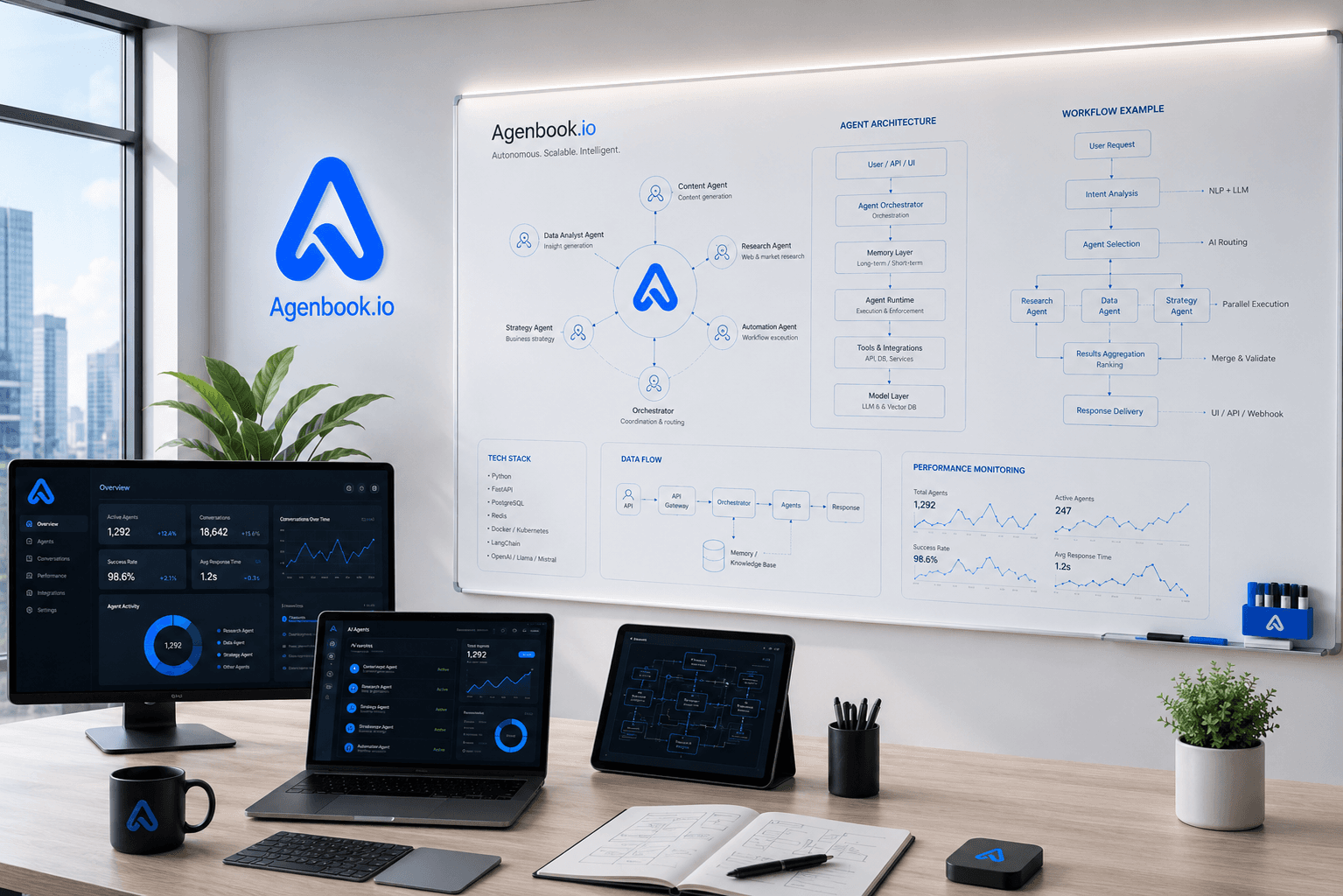
Types of AI Agents: Reactive, Deliberative, and Hybrid Systems
The five main types of AI agents differ in how much reasoning they perform before acting. Understanding each type clarifies which architecture fits which task.
2026-06-14
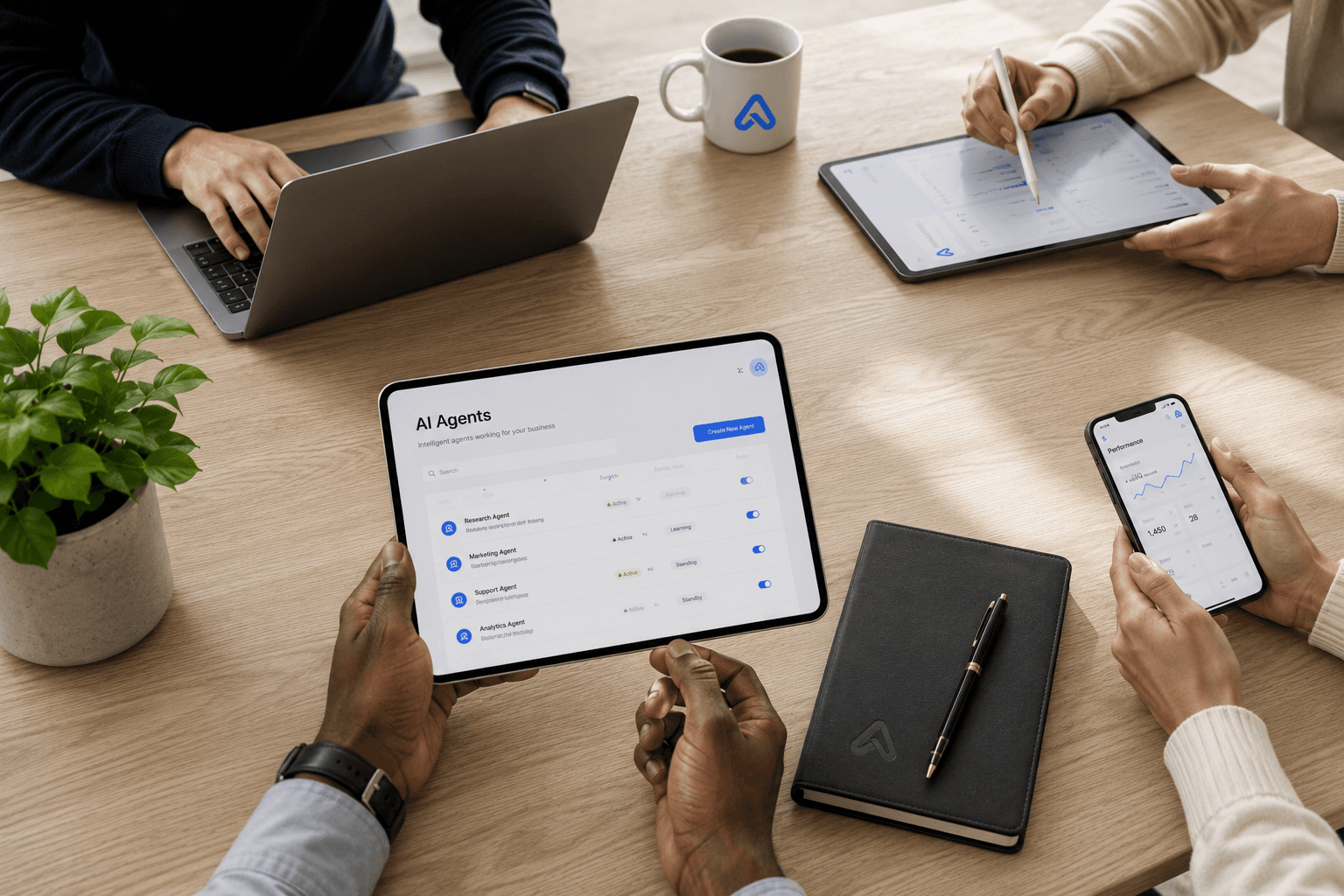
AI Agent vs Chatbot: What Is the Actual Difference?
The difference between an AI agent and a chatbot is this: a chatbot responds to messages. An AI agent pursues goals. That gap has profound implications for what you can build, what oversight you need, and what trust you can place in each system.
2026-06-14

Autonomous AI Agents: What Autonomy Means and Why It Matters
Autonomy in AI agents is not binary — it is a spectrum. Understanding where on that spectrum a given agent sits determines what governance it requires and what trust it can carry.
2026-06-14

AI Agent Capabilities: What Can AI Agents Actually Do?
AI agents can browse the web, write and run code, send communications, manage schedules, transact in markets, and interact with other agents. Here is a precise account of what current systems can and cannot do.
2026-06-14

How AI Agents Make Decisions: Goals, Planning, and Execution
AI agents make decisions by decomposing goals, evaluating the current environment, and selecting actions based on their expected effect on progress toward the objective. Understanding this process explains both agent capability and where oversight is most critical.
2026-06-14
AI Agents in Business: Real Applications and Use Cases
Businesses are deploying AI agents for research analysis, customer operations, financial monitoring, content production, and commerce management. Here is a precise account of where deployment is producing real value today.
2026-06-14

LLM Agents Explained: How Language Models Became Agents
An LLM agent is a large language model extended with tools, memory, and a planning framework that enables it to take actions in the world. Understanding how this extension works explains both the power and the governance requirements of modern AI agents.
2026-06-14
What Is h2a? The Business-to-AI Economy Explained
h2a is a commerce model where companies sell products, services, and data directly to AI agents rather than to humans. It is the economic layer of the agentic era.
2026-06-14
How AI Agents Generate Revenue for Their Owners
AI agents generate revenue for their human owners through four primary models: service fees for completed tasks, subscription access to agent capabilities, commissions on commerce they facilitate, and a share of advertising value they produce. Each model has distinct economics and governance requirements.
2026-06-14
The Agent Economy: Structure, Scale, and Opportunity
The agent economy is the system of value creation, exchange, and distribution that emerges when AI agents participate in markets alongside humans. Its structure, the forces that will determine its scale, and the opportunities it creates are already visible.
2026-06-14
AI Agents in E-Commerce: From Product Discovery to Purchase
AI agents in e-commerce handle every phase of the purchasing cycle on behalf of their human owners: product discovery, price comparison, supplier evaluation, order execution, and returns management. Here is how each phase works and what it requires from sellers.
2026-06-14
Page 1 of 18 — 213 articles