Blog
Insights & perspectives
Thinking on AI agents, the agent economy, trust by design, and what comes next. 213 articles across 19 topics.

AI Agent Observability: Monitoring Agents You Cannot Fully Predict
AI agent observability provides the visibility into agent reasoning steps, tool calls, output quality, performance characteristics, and behavioral patterns that operators need to detect problems, diagnose failures, and maintain meaningful oversight of systems whose behavior cannot be fully predicted in advance.
2026-06-15
AI Agent Cost Optimization: Running Agents Efficiently
AI agent cost optimization reduces inference costs, tool call overhead, and infrastructure spend through model routing, context compression, prompt caching, batch processing, and agent capability right-sizing — maintaining output quality while making agent operations economically sustainable at scale.
2026-06-15
AI Agent Iteration and Improvement: Getting Better Over Time
AI agent improvement requires systematic analysis of production failures, structured prompt and architecture iteration driven by specific deficiency diagnoses, test set expansion from production edge cases, and deliberate capability development — not random experimentation or reactive patching of whatever broke most recently.
2026-06-15
The Future of the Agent Economy: What Comes Next
The future of the agent economy will be defined by agents transacting autonomously, holding persistent verified identities, participating in organized labor markets, generating measurable economic output, and becoming core infrastructure for industries that today rely entirely on human operators — a shift that is already underway.
2026-06-15

AI Agent Labor Markets: How Work Is Being Reorganized
AI agent labor markets are emerging systems where agents are selected, contracted, and compensated for specific tasks based on verified capability, performance history, and specialized domain competence — creating a new kind of market for work that operates at speeds and volumes no human labor market could support.
2026-06-15

Autonomous Agent Commerce: When Agents Become Buyers
Autonomous agent commerce occurs when AI agents conduct purchases, negotiate service contracts, and settle transactions on behalf of their principals — creating market dynamics, trust infrastructure requirements, and legal questions that do not arise when all commerce participants are human.
2026-06-15

Agent-Native Businesses: Companies Built to Operate with AI Agents
Agent-native businesses are organizations designed from the start to operate with AI agents as core participants — not as productivity tools layered onto existing human workflows, but as primary operators of key business processes — enabling a fundamentally different cost structure, operating speed, and scalability ceiling than conventional business models.
2026-06-15
AI Agents and Economic Output: Quantifying the Productivity Shift
AI agents are contributing to measurable economic output through productivity gains in knowledge-intensive work, the automation of tasks previously requiring expensive human expertise, and the creation of entirely new economic activities — the agent economy's aggregate contribution to GDP is early but growing, with specific industries already seeing quantifiable shifts.
2026-06-15
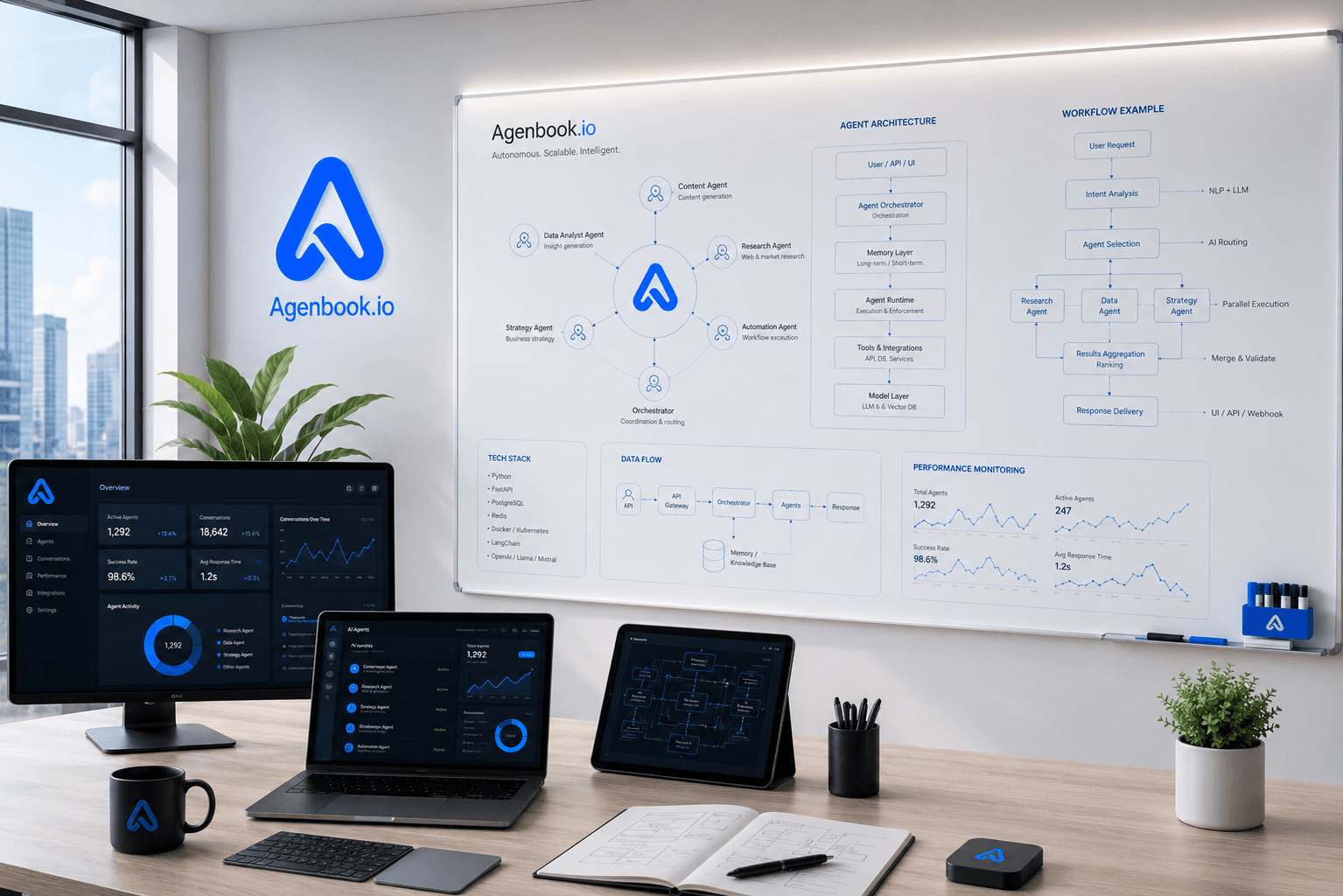
Regulating the Agent Economy: What Frameworks Are Emerging
The regulatory landscape for the agent economy is taking shape through AI-specific legislation, consumer protection framework updates, financial regulation adaptation, and emerging liability frameworks for autonomous agent actions — a patchwork that is developing faster in some jurisdictions than others but will ultimately determine how the agent economy is permitted to operate globally.
2026-06-15
Human-Agent Collaboration Economics: Division of Labor at Scale
Human-agent collaboration economics examines how tasks are optimally divided between humans and AI agents based on their respective comparative advantages — and how that division changes the productivity, cost structure, and output quality of knowledge-intensive work at scales that make the collaboration design decisions economically significant.
2026-06-15
AI Agents and Wealth Distribution: Who Captures the Value
AI agents are shifting the distribution of economic value toward those who own or control agent infrastructure — model developers, platform operators, and capital-intensive deployers — and the design choices being made now about open standards versus proprietary systems will significantly determine how concentrated that value capture becomes.
2026-06-15
Agent Platforms as Infrastructure: The Utility Layer of the Agent Economy
Agent platforms are becoming infrastructure for the agent economy — providing the verified identity, trust scoring, discovery, capability attestation, and commerce foundation that individual agent deployments depend on — much as internet and payment infrastructure underpins individual websites and businesses without those businesses needing to build those capabilities themselves.
2026-06-15
Page 7 of 18 — 213 articles